

Why Is My Sliding Door Making Noise? (And How to Fix It!)

Updated: 4 days ago

A noisy sliding glass door usually means something simple is wrong dirt in the track, worn rollers, or parts rubbing without lubrication. The good news: most of these problems can be fixed in minutes with a few basic tools. Below are the most common causes and the practical fixes homeowners use every day.

1. Dirty Tracks
That gritty scraping sound is usually sand, dust, or small debris grinding inside the track.
How to fix it:
Vacuum the entire track to remove sand and debris.
Wipe the track with a damp cloth.
Let it dry completely before sliding the door again.
If the door still feels rough after cleaning, applying a small amount of silicone spray lubricant can dramatically reduce friction and help the rollers glide smoothly.
💡 Clean tracks regularly. Florida sand builds up fast.
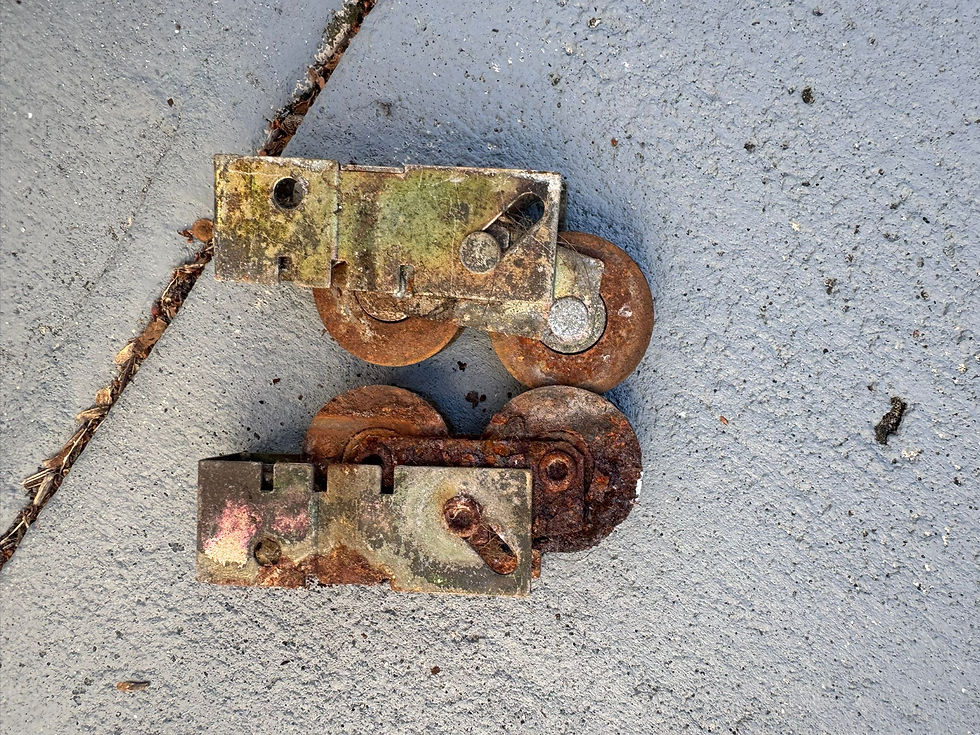
2. Worn or Misaligned Rollers
Rollers carry the full weight of your sliding door. Over time they wear down or shift out of alignment, which creates grinding or squeaking noises. A same-day sliding door roller replacement usually resolves this completely.
How to fix it:
Locate the roller adjustment screws at the bottom corners of the door.
Lower the rollers slightly and tilt the door panel out.
Lift the panel off the track.
Replace damaged rollers and reinstall the door. Using a basic door repair toolkit makes adjusting and removing the door much easier during this process.
💡 Most rollers are either 3/4" or 1". Measuring the old one first helps ensure the right fit.
3. Bent or Damaged Tracks
A small dent in the track can interrupt the rollers and create clicking or grinding sounds. If tapping it out doesn't help, professional track repair is often the fastest path forward.
How to fix it:
Inspect the entire track for dents or warping.
Use a rubber mallet to gently tap small bends back into shape.
For larger alignment problems, a frame expansion tool can help straighten pressure points along the frame.
💡 Even a small track dent can affect the door's movement, so inspect closely.

4. Lack of Lubrication
Metal parts rubbing together without lubrication will always create noise.
How to fix it:
Clean the track first.
Apply a light coat of silicone spray lubricant along the track and into the roller housings.
Slide the door back and forth several times to distribute the lubricant evenly.
💡 Avoid grease or WD‑40 — they attract dirt and make the problem worse over time.

5. Door Misalignment
If the door sits unevenly on the track, the rollers drag instead of gliding. This is the same root cause behind why sliding doors bounce back open — worth reading if you're dealing with both issues.
How to fix it:
Find the adjustment screws near the bottom corners of the door.
Turn them slowly to raise or lower the rollers.
Test the door after each small adjustment until it slides smoothly.
When removing heavy panels to adjust alignment, vacuum suction cup handles make lifting and repositioning the glass much safer.
💡 Sliding door glass panels can weigh over 100 pounds — always lift carefully.

Extra Fix: Replace a Worn Track Cover If the track cover is cracked or missing, sand and debris will constantly enter the track.
How to fix it:
Remove the damaged cover.
Clean the track thoroughly.
Cut and install a new track cover.
💡 This small part can dramatically reduce long‑term noise and wear.
Bottom Line
Most noisy sliding doors come down to three things: dirt in the track, worn rollers, or no lubrication. Clean the track, lubricate it, and adjust the rollers first. With basic tools that takes about 30 minutes and fixes most doors. If the noise comes back within a few weeks, the rollers or track are usually too worn for cleaning to help.
When to Call a Pro
Get a professional to look at it if:
The door still grinds after you clean and lubricate it
The rollers keep slipping out of alignment
The track is bent, cracked, or corroded
The panel is too heavy for you to lift safely
Gators Sliding Doors repairs sliding glass doors across Central Florida, including rollers, tracks, locks, and alignment. We don't push a new door when a repair will do the job.
Orlando & Orange County
Nearby: Winter Park · Winter Garden · Apopka
West of Orlando, we also fix noisy sliding doors in Clermont and the rest of Lake County.
Daytona Beach & Volusia County
Flagler County
Not sure which area you're in? See all service locations.
📞 Call or Text: (386) 888-7434🌐 Book a repair online: gatorsslidingdoors.com/contact

Comments