

How to Prepare Your Sliding Glass Doors for Hurricane Season in Central Florida (2026)

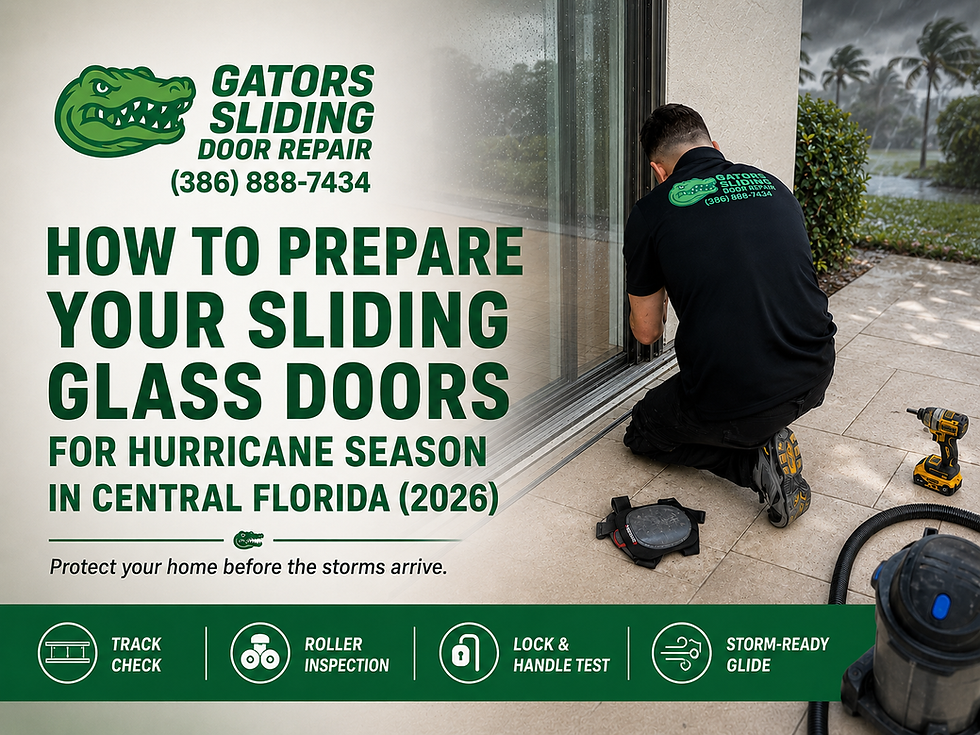
Most prep runs under $100 in parts. Professional service starts at $199 per door.
Hurricane season in Central Florida runs June 1 through November 30. Your sliding glass door is one of the biggest weak spots in your home, and the fix comes down to three things: weatherstripping, rollers, and the lock.
Get those three right and your door is ready for the season.
Florida tip: A sliding door that already struggles on a calm day will fail in a storm. Fix small issues now, not in August.
1. Weatherstripping Stops the Water
Hurricane rain doesn't fall, it flies sideways at 100 miles per hour. Worn weatherstripping is how that water gets into your living room.
Run your hand along the closed door. Feel for drafts. Look for daylight at the edges. Check the bottom sweep where the door meets the threshold.
If the rubber feels hard, cracked, or flat, replace it. A full weatherstripping kit costs $15 to $40 and takes about an hour. It's the cheapest, most important upgrade you can make before a storm.
2. Rollers Keep the Door on Its Track
Worn rollers let the door sag. A sagging door sits crooked, the lock doesn't fully engage, and wind pressure can lift it right off the track.
Open and close the door slowly. If it grinds, sticks, or fights you, your rollers are done.
Stainless steel replacement rollers run $30 to $60 each, and most doors use two to four. A full roller replacement job starts at $199 because the glass panel has to come out, and sliding door glass is heavy and expensive to drop.
Florida tip: Salt air and humidity kill cheap roller wheels in two to three years. If you can't remember when you last replaced yours, you're overdue.
3. The Lock Has to Actually Lock
Most builder-grade sliding door locks are weak. Hurricane wind pressure can pop a worn lock open and turn your living room into a wind tunnel.
Lock the door and try to push it open from the outside. If it moves at all, the lock isn't doing its job.
Two cheap upgrades make a big difference:
A foot bolt or pin lock at the top or bottom adds a second engagement point. Runs $15 to $40.
A Charley bar drops across the track and physically blocks the door from sliding. Runs $25 to $50.
Both install in under 30 minutes with a screwdriver.
Storm-Day Checklist
When a hurricane is 48 hours out:
Lock every sliding door, including the secondary lock or Charley bar. Move outdoor furniture and planters away from the glass. Close interior doors to slow pressure spread if the worst happens.
At a Glance
Three things matter for your sliding door before hurricane season: weatherstripping to block wind-driven rain, healthy rollers to keep the door on its track, and a working lock with a backup. Total cost for DIY parts is usually under $100. Professional service starts at $199 because handling heavy glass panels takes two people and proper tools.
Three Tips Before the Season Hits
Test every sliding door today. Lock it, push it from outside, slide it open and closed. Problems show up in 30 seconds.
Don't wait until May. Roller and weatherstripping jobs back up fast once the first storm gets a name.
Take a photo of each door now. If you do take storm damage, before-and-after photos speed up your insurance claim.


Comments